Archives
- 2026-10
- 2026-09
- 2026-08
- 2026-07
- 2026-06
- 2026-05
- 2026-04
- 2026-03
- 2026-02
- 2026-01
- 2025-12
- 2025-11
- 2025-10
- 2025-03
- 2025-02
- 2025-01
- 2024-12
- 2024-11
- 2024-10
- 2024-09
- 2024-08
- 2024-07
- 2024-06
- 2024-05
- 2024-04
- 2024-03
- 2024-02
- 2024-01
- 2023-12
- 2023-11
- 2023-10
- 2023-09
- 2023-08
- 2023-07
- 2023-06
- 2023-05
- 2023-04
- 2023-03
- 2023-02
- 2023-01
- 2022-12
- 2022-11
- 2022-10
- 2022-09
- 2022-08
- 2022-07
- 2022-06
- 2022-05
- 2022-04
- 2022-03
- 2022-02
- 2022-01
-
Although the immobilization by histidine tag exhibits effect
2023-09-05

Although the immobilization by histidine tag exhibits effectiveness in oriented enzyme immobilization, it still faces some challenges [31]. On one hand, some unnecessary metal-binding proteins that interfere with the combination between the target protein and the supports or the additional interacti
-
Since the introduction of zebrafish into the laboratory
2023-09-05
Since the introduction of zebrafish into the laboratory, many milestones have been achieved that firmly establish this organism as a prominent genetic model for biology and medicine. Many features make this species an organism of easy maintenance in laboratory which provides advantages to understand
-
hsp70 inhibitor An alternative more rarely used electron mic
2023-09-04
An alternative, more rarely used, electron microscopy-based approach exploits labeling of phagosomes with DAMP (3-(2,4-dinitroanilino)-30-amino-N-methyldipropylamine). DAMP is a weakly basic compound which is membrane-impermeable once it has been protonated. This way, DAMPH+ accumulates in acidic in
-
br Conclusions In summary we report a
2023-09-04
Conclusions In summary, we report a novel preliminary finding of a potential racial difference in the association of Cd-content and AR expression in prostate cancer that will need to be confirmed in larger studies. Although the association of Cd and AR protein expression is not strong in tumor ti
-
While there is much in vivo
2023-09-04
While there is much in vivo work on prion-like Aβ, it has not been shown that one can induce inclusions of Aβ in cultured cells as has been shown for tau and α-synuclein. One reason is practical; Aβ is a low molecular weight metabolite cleaved from within the larger amyloid precursor protein (APP) a
-
Since all the above vascular and glomerular effects
2023-09-04
Since all the above vascular and glomerular effects contribute to blood pressure regulation, it is expected for 12/15-LOX pathway to play a role in pathogenesis of hypertension (Fig. 6). Indeed, there is evidence for alterations of the 12- and 15LOX enzymes and metabolites both in humans with essent
-
To further demonstrate the significance of Nrf activation in
2023-09-04
To further demonstrate the significance of Nrf2 activation in the prevention of EGF-induced CRC growth by AR inhibitor, we examined the effect of fidarestat on EGF-induced cell viability in Nrf2-ablated cells. Our results suggest that AR inhibitor prevented the EGF-induced cell viability in control
-
Introduction Glaucoma consists of a group of eye
2023-09-04
Introduction Glaucoma consists of a group of eye diseases showing a broad spectrum of clinical presentation and unknown aetiologies, that lead to a permanent loss of visual function due to the death of retinal ganglion Cathepsin Inhibitor 1 australia and damage of the optical nerve. It is well acc
-
br Expression of ADK in the normal brain In
2023-09-04

Expression of ADK in the normal brain In adult brain, ADK is primarily expressed in astrocytes. Immunocytochemical analysis of adult rat and mouse NU 1025 revealed predominant astrocytic expression throughout the hippocampus and cortex. Two isoforms of ADK have been identified in mammals, a long
-
Macrophage polarization is linked to activation of the ligan
2023-09-04
Macrophage polarization is linked to activation of the ligand-dependent transcription factor PPARγ. Recently, Odegaard et al. demonstrated with a macrophage-specific deletion of PPARγ in mice that alternative macrophage activation is impaired [14]. We provided evidence that contact to apoptotic favi
-
A large number of studies have shown that oxidative
2023-09-01
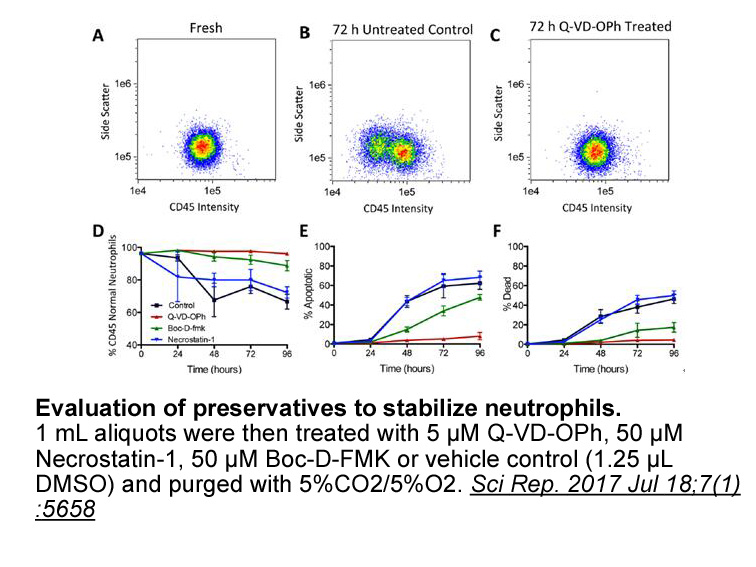
A large number of studies have shown that oxidative stress is involved in the pathophysiological process of ventricular remodeling and is associated with left ventricular dysfunction (Hori and Nishida, 2009, Lord et al., 2010). The generation of reactive oxygen species (ROS) that exceeds anti-oxidat
-
br Materials and methods br Results and
2023-09-01
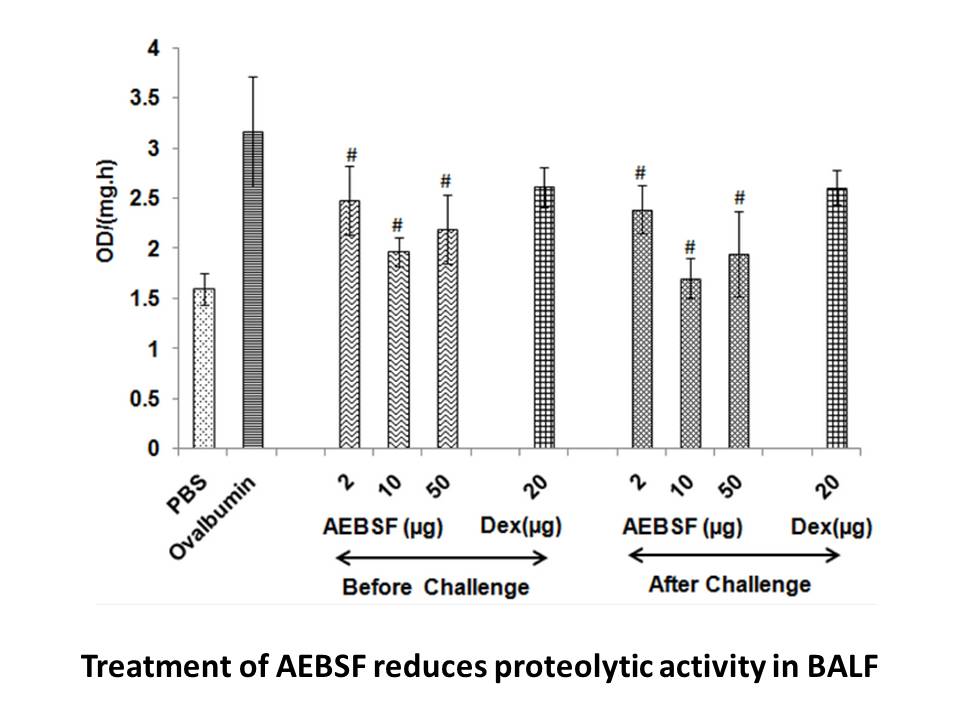
Materials and methods Results and discussion Conclusion The preparation of acrylic nanoparticles as aminosugar carriers could not be achieved by direct functionalization of poly(t-butyl acrylate) particles with saccharide groups. A four-step procedure starting from a protected derivative of
-
The reasons why antibiotic treatment may be detrimental are
2023-09-01
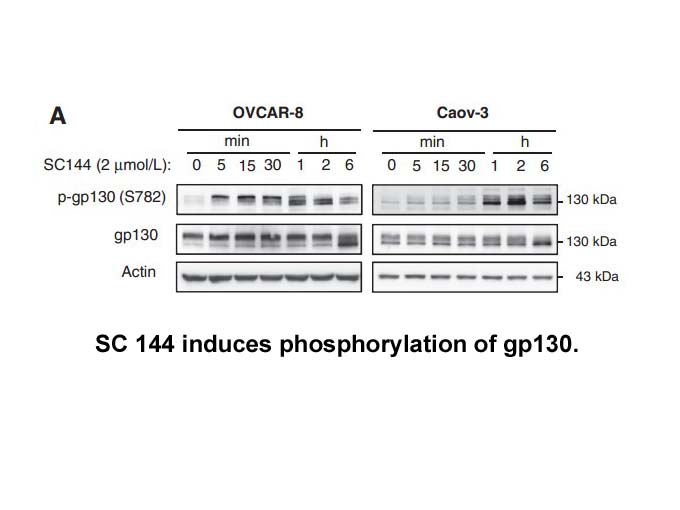
The reasons why antibiotic treatment may be detrimental are diverse. First, it may result in disruption of multifaceted microbe–microbe, as well as microbe–host, interactions that are key for the maintenance of homeostasis within this ecosystem. This can lead to the expansion of pathogenic microorga
-
Regardless of the initial treatment most patients
2023-09-01
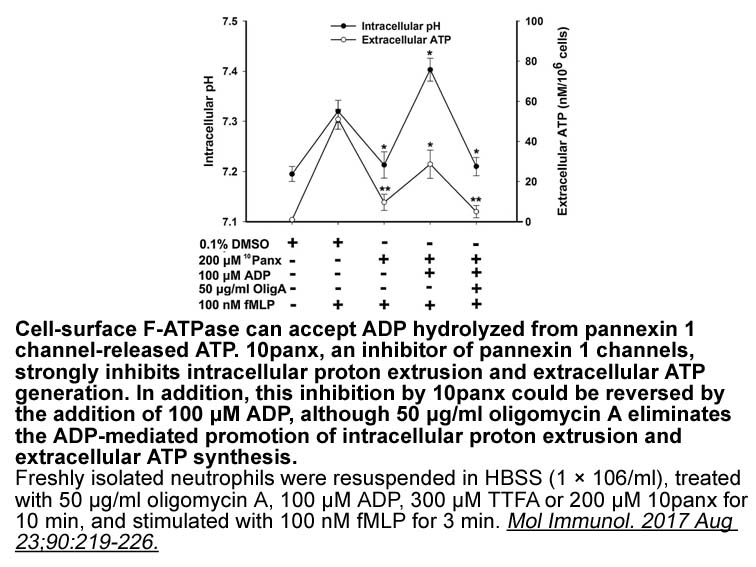
Regardless of the initial treatment, most patients with advanced NSCLC experience relapse and disease progression [15]. A subpopulation of immediate concern and clinical need is patients who have advanced NSCLC that is especially aggressive, which is usually defined as disease that rapidly progresse
-
br AR signaling and urothelial cancer progression As shown
2023-09-01
AR signaling and urothelial cancer progression As shown in other types of malignancies, such as prostate cancer cells, it has been documented that androgens induce AR expression and its nuclear translocation as well as ARE promoter activity in urothelial cancer cells (Chen et al., 2003, Izumi et
8643 records 322/577 page Previous Next First page 上5页 321322323324325 下5页 Last page